Buying a lifted golf cart across borders is more complicated than choosing larger tires and a brighter finish. Lifted Golf models vary in suspension quality, battery systems, motor output, seating design, and after-sales support. A cart that performs well on a flat private course may struggle on steep roads, loose gravel, or wet coastal terrain. The right choice begins with honest use conditions.
Golf-cart industry consultant Bob Clements offers a practical reminder: “Buy for the terrain you have, not the image you want.” That idea should guide every global buyer. Check ground clearance, turning radius, braking performance, battery availability, charger compatibility, and the vehicle’s loaded weight. Ask for clear specifications, not impressive photographs. Confirm whether replacement parts can reach your country without long delays. Warranty language also deserves careful attention, especially when service must cross oceans.
Small details matter. A lifted cart may need stronger steering components, upgraded shocks, or better corrosion protection. Lithium batteries can reduce weight, but they require suitable charging equipment and trained servicing. Local registration, road-use rules, import procedures, and safety standards must be verified before payment. These requirements differ widely between regions. No checklist removes every surprise. Even experienced buyers sometimes underestimate shipping damage, climate effects, or technician shortages. That is why this guide examines ten practical Lifted Golf buying tips, from supplier credibility to long-term operating costs. The goal is not the most dramatic cart. It is a dependable vehicle that fits your terrain, budget, maintenance access, and daily expectations.
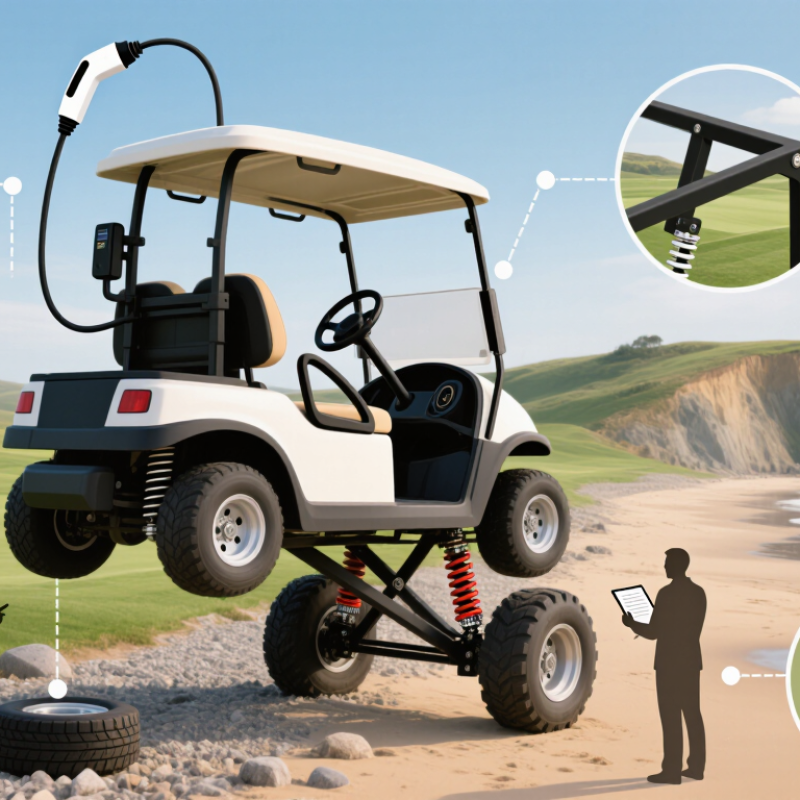
A lifted golf cart should match how it will be driven, not simply look taller. Start by recording typical trips: paved roads, gravel lanes, sloped paths, or grass. A weekend property owner may need clearance for roots and ruts. A resort operator may value smooth turning and predictable braking more. During a test drive, note steering effort, stopping distance, and body movement over uneven ground. Do not judge comfort from a ten-minute ride alone. Real use changes everything.
Terrain determines more than lift height. Larger tires can improve clearance, but they may reduce acceleration and increase steering load. Ask for the rated payload, suspension design, and recommended tire pressure. On wet slopes, traction matters more than dramatic clearance. A 20 percent incline feels very different with four passengers aboard. That is where optimistic sales language meets physics. Inspect underbody protection and measure the narrowest gate before ordering.
Passenger capacity should include people, bags, and equipment. Four adults with coolers require more braking and suspension capacity than two passengers. Check seating position, handholds, foot space, and rear visibility. Weight distribution matters; heavy cargo behind the axle can make handling unsettled. A qualified technician should explain how the lift kit affects alignment and maintenance intervals. Ask for written specifications, not promises. I once underestimated storage needs on a property vehicle; the extra trips were avoidable. Leave room for that mistake when choosing capacity.
Lifted Golf Cart Buying Tips for Global Buyers
Compare the lift kit, tires, suspension, and actual ground clearance as one system. A two-inch lift does not automatically create two inches of usable clearance. Tire diameter raises the axle by half the diameter increase. Suspension lift raises the chassis, but may leave the differential exposed. Measure the lowest point with the cart loaded, not empty. Small detail. Big difference.
The Tire and Rim Association’s 2024 Year Book provides load ratings, tire dimensions, and inflation guidance for off-road applications. Use those figures before selecting oversized tires. A wider tire can improve stability on firm ground, but it may increase steering effort and contact the suspension during turns. Check full-lock clearance carefully. I have seen buyers measure only the straight-ahead position. That mistake is easy to repeat.
Suspension quality matters more than lift height. A properly matched spring and damper package can control body movement over ruts. Excessively stiff springs may reduce comfort and traction on uneven surfaces. The U.S. Consumer Product Safety Commission’s injury surveillance data continues to identify golf-cart crashes as a recurring source of serious recreational-vehicle injuries. That supports conservative handling choices, especially on slopes. Confirm the manufacturer’s axle rating, brake capacity, wheel offset, and tire pressure range. Regulations and road-use requirements vary by country, so local inspection rules deserve attention before purchase. Clearance is useful. Stability is essential.
| No. | Buying Factor | Typical Standard Cart | Common Lifted-Cart Specification | Practical Benefit | What Global Buyers Should Check |
|---|---|---|---|---|---|
| 1 | Choose the lift height | Approximately 4–6 in (10–15 cm) of underbody clearance, depending on the chassis and load. | Lift kits commonly add 3–6 in (7.5–15 cm); larger lifts may require additional steering and suspension components. | Improves obstacle clearance and reduces the risk of scraping on uneven paths. | Confirm the finished ground clearance, not only the advertised lift-kit height. Ask whether the measurement is taken with passengers and batteries installed. |
| 2 | Compare tire diameter | Usually 18–20 in (46–51 cm) overall diameter on compact configurations. | Lifted setups often use tires around 22–25 in (56–64 cm) in diameter. | Larger tires can increase rolling clearance and improve traction on loose or irregular surfaces. | Check wheel-well clearance, steering lock, load rating, and whether the tire size affects speedometer accuracy or motor performance. |
| 3 | Select the correct lift-kit design | Factory-height carts generally use the original suspension geometry. | Drop-spindle and long-travel systems can preserve more factory geometry; block or spacer lifts are simpler but may offer less suspension travel. | A suitable design can improve stability, ride quality, and component alignment. | For road use, verify steering geometry, brake-line length, axle alignment, and local inspection requirements after modification. |
| 4 | Evaluate suspension travel | Standard suspension is normally tuned for paved paths and moderate, low-speed use. | Off-road-oriented configurations may provide approximately 3–6 in (7.5–15 cm) of usable wheel movement, depending on the system. | More travel helps keep the tires in contact with the ground over ruts and small obstacles. | Ask for shock type, spring rate, bushing material, and maximum travel. More travel is not automatically better for a heavy utility load. |
| 5 | Check ground clearance at the lowest point | Typical low-point clearance may be about 4–6 in (10–15 cm). | A properly configured lifted cart may provide approximately 7–12 in (18–30 cm), depending on tire size, payload, and suspension setup. | Higher clearance helps protect the frame, differential, and battery tray from rocks, roots, and uneven terrain. | Measure the lowest fixed component. Clearance can decrease significantly when passengers, cargo, or heavy battery packs are added. |
| 6 | Match tire tread to the terrain | Street-oriented tread is quieter and usually offers lower rolling resistance on pavement. | All-terrain tread provides a compromise; aggressive off-road tread delivers more loose-surface grip but can be noisier. | The correct tread improves braking and traction without unnecessarily reducing range or increasing vibration. | For mixed international use, compare wet grip, mud performance, noise, puncture resistance, and the tire’s load and speed ratings. |
| 7 | Confirm wheel offset and width | Narrow wheels generally reduce steering effort and help keep the original turning radius. | Wider wheels and additional offset can improve stance, but may increase scrub radius and place greater loads on bearings. | Correct wheel dimensions prevent tire rubbing and help maintain predictable steering. | Verify bolt pattern, center bore, offset, wheel width, fender clearance, and full-lock clearance before ordering. |
| 8 | Consider payload and total vehicle weight | Many small carts are designed for approximately 2–4 occupants and light cargo, but capacity varies by configuration. | Lifted accessories, larger wheels, batteries, seats, and cargo can add significant weight and reduce available payload. | A suitable payload margin improves braking, handling, range, and suspension life. | Use the manufacturer’s gross vehicle weight rating and axle ratings. Subtract the cart’s curb weight, accessories, passengers, and cargo from the rated limit. |
| 9 | Compare powertrain requirements | Original-size tires place less demand on the motor, controller, transmission, and battery. | Larger or heavier tires increase rotational mass and may require more torque, especially on hills or soft ground. | A correctly matched powertrain helps prevent overheating and excessive battery drain. | Check motor output, controller current, battery voltage, hill conditions, charging standards, and replacement-part availability in the destination country. |
| 10 | Verify road-use and import requirements | Standard carts may still be restricted to private property in many regions. | Lifted carts can have changes to lighting height, braking, steering, dimensions, and rollover characteristics. | Early compliance checks reduce registration, insurance, shipping, and modification problems. | Confirm local rules for maximum width, lighting, mirrors, seat belts, tires, braking, speed, noise, charging equipment, and vehicle certification. |
A lifted golf cart needs more than attractive ground clearance. Larger tires increase rolling resistance, while hills and passengers demand stronger low-speed torque. Electric powertrains suit quiet residential routes and require less routine maintenance. Gasoline systems may offer faster refueling in remote areas, but fuel storage adds weight and maintenance work. The U.S. Department of Energy explains that driving conditions, payload, and temperature can significantly affect electric vehicle range. Golf carts are no exception.
Lead-acid batteries usually cost less initially and tolerate simple servicing. Lithium-ion batteries are lighter, charge faster, and typically provide steadier performance. Battery Council International reports that lead batteries achieve recycling rates above 99% in the United States. That is a strong sustainability point, though battery weight still matters on a lifted chassis. Check charger compatibility, replacement availability, and local service skills before choosing.
The Global EV Outlook 2024 from the International Energy Agency shows how temperature, speed, and battery condition influence real-world electric range. Test the cart on your actual route, including slopes, loose gravel, and repeated stops. A practical buffer of 20% is sensible. Maybe 30% is better in cold climates. I would not trust a showroom number alone. Ask for battery age, tested capacity, and performance with the intended load.
10 Lifted Golf Cart Buying Tips for Global Buyers
Check Safety Features, Local Laws, and Road-Use Requirements
A lifted golf cart can handle uneven ground, but extra height changes its balance. Inspect the suspension, steering joints, brakes, and frame for play or unusual wear. Tires should match the lift and carry the cart’s full load rating. Ask for the tire age, too. Old rubber may look acceptable but lose grip quickly. During a test drive, listen for clunks, test emergency braking, and check whether the cart leans during turns. It should also have working seat belts, mirrors, lights, reflectors, a horn, and reliable parking brakes.
Road rules differ widely between countries, regions, and even towns. Before paying, contact the local transport authority and confirm whether the cart can use public roads. Check registration, insurance, speed limits, vehicle dimensions, lighting standards, and required safety equipment. Some roads may require approved indicators, windscreen protection, or a specific driving licence. Private-property use is not the same as road approval. Get the requirements in writing where possible.
My first lifted-cart inspection focused too much on appearance. That was a mistake. A tall stance looked impressive, but the turning radius and stopping distance mattered more. Ask how the lift affects the center of gravity, passenger capacity, and cargo limit. Test it with realistic weight, not an empty seat. Consider rain, steep driveways, loose gravel, and nighttime visibility. A local technician can inspect modifications and verify compliance. Imported vehicles may need extra checks, and translated documents can still contain missing details. Recheck everything before delivery.
10 Lifted Golf Cart Buying Tips for Global Buyers
Assess Quality, Total Cost, Shipping, Warranty, and Global Support
A lifted golf cart may look ready for rough roads, but appearance proves little. Inspect frame welds, suspension joints, steering play, brake response, tire age, and battery condition. Ask for service records and a cold-start video. A quiet motor is useful evidence. Measure ground clearance, overall width, and turning radius against your storage area. Oversized tires may reduce range and increase steering wear. That trade-off is easy to miss.
Calculate total cost before negotiating. Include the purchase price, inspection, crating, freight, insurance, destination handling, taxes, duties, assembly, and replacement parts. Request a written landed-cost estimate. Shipping quotes can exclude port fees. Confirm battery shipping requirements and packaging protection. Photograph the crate before opening it. If damage appears, record it immediately and notify the carrier and seller. A cheap cart can become expensive after arrival.
Read warranty terms line by line. Check coverage for the frame, motor, controller, charger, batteries, and suspension. Ask who pays labor and return freight. Confirm support hours, languages, and regional parts availability. Request manuals, wiring diagrams, parts lists, and troubleshooting steps. Test remote support with two practical questions before purchasing. Good sellers answer clearly. Still, promises are not proof. My own mistake was trusting polished photos over measurements and documents. Leave room for uncertainty, and arrange an independent inspection when possible.
Suggested decision-weighting framework for assessing quality, total cost, shipping, warranty, and global support.
Quality and safety should receive the greatest weight because lifted carts place additional demands on suspension, brakes, steering, tires, and frame components. Buyers should also compare the complete delivered cost, including shipping, import duties, local compliance work, maintenance, parts availability, and warranty coverage. These percentages are a practical evaluation framework rather than a supplier or brand market-share survey.
Match the cart to your usual routes. Paved roads need different settings than gravel lanes, grass, or sloped paths. Measure roots, ruts, wet areas, and narrow gates. During testing, notice steering effort, braking distance, and body movement. Ten minutes may mislead you.
No. A two-inch lift does not guarantee two inches of usable clearance. Larger tires raise the axle by half their diameter increase. A suspension lift may leave the differential exposed. Measure the lowest point with passengers and cargo aboard. Small detail. Big difference.
Larger tires can improve clearance but reduce acceleration. They may also increase steering effort and suspension contact. Check clearance with the wheels turned fully left and right. Confirm tire load ratings, dimensions, and recommended pressure. Straight-ahead measurements are not enough.
Compare springs, dampers, axle ratings, brake capacity, and wheel offset. A matched suspension controls movement over uneven ground. Very stiff springs can reduce comfort and traction. Ask a qualified technician about alignment and maintenance intervals. Lift height is not everything.
Count people, bags, coolers, tools, and other equipment together. Four adults with heavy coolers need stronger braking and suspension capacity. Check handholds, foot space, seating position, and rear visibility. Keep heavy cargo near the center. Do not overload the rear.
Inspect brakes, steering joints, suspension, frame, and parking brakes. Test emergency braking and listen for clunks during the drive. The cart should have working belts, mirrors, lights, reflectors, and a horn. Check tire age because old rubber may lose grip quickly. Appearance can hide wear.
Confirm road eligibility with your local transport authority before paying. Ask about registration, insurance, speed limits, dimensions, and lighting requirements. Some areas may require indicators, windscreen protection, or a specific licence. Private-property permission does not equal public-road approval. Get the requirements in writing.
Check translated specifications, imported-vehicle inspections, and local compliance documents. Confirm the cart’s load limit, tire pressure range, and safety equipment. Test it with realistic passengers, gravel, rain, and steep driveways. Night visibility deserves attention. I once focused too much on appearance; that was a mistake.
Buying a Lifted Golf Cart for international use requires more than choosing a stylish appearance. Start by identifying how and where you will drive, including terrain, passenger capacity, cargo needs, and expected travel frequency. Compare lift kits, tire sizes, suspension systems, and ground clearance to ensure stable handling and suitable performance on uneven surfaces. Then evaluate the powertrain, battery type, charging needs, and realistic driving range for your daily routes and climate.
Safety and practical ownership should guide the final decision. Check braking, lighting, seat belts, mirrors, and other essential safety equipment, while confirming that the vehicle meets local road-use and registration requirements. Finally, calculate the total cost, including configuration, maintenance, shipping, import procedures, and possible replacement parts. A clear warranty, dependable technical support, and accessible service resources can make ownership easier across borders. By balancing performance, safety, quality, and long-term value, global buyers can select a Lifted Golf Cart that fits both their lifestyle and operating environment.

Zhigao