Choosing the right Golf Course Carts in 2026 requires more than comparing prices online. Course owners, resort managers, and private buyers need dependable performance, practical comfort, and clear ownership costs. A cart that looks polished in a showroom may struggle on steep paths, wet grass, or long daily routes. Real operating conditions matter.
This guide examines golf course carts for sale worldwide, including electric, lithium-powered, and fuel-powered models. It considers seating capacity, driving range, charging time, battery life, braking systems, suspension, storage, and maintenance access. Small details can shape daily results. A quiet motor improves visitor comfort. Strong headlights support early maintenance rounds. A corrosion-resistant frame can matter near coastal courses.
Specifications tell only part of the story. Dealer support, replacement parts, warranty terms, and local service expertise deserve equal attention. Buyers should also confirm applicable transport, safety, and environmental requirements in their region. Standards differ across countries and may change over time. Professional advice remains useful.
Some comparisons are imperfect. Published range figures often reflect controlled testing, not crowded fairways or steep terrain. We will question those claims where practical evidence is limited. A lower purchase price may become expensive after repeated repairs, battery replacement, or weak after-sales support. Conversely, premium equipment is not automatically the best choice. The right cart should match terrain, workload, climate, and budget. Expect balanced guidance, realistic examples, and careful observations for making a confident 2026 purchase decision.
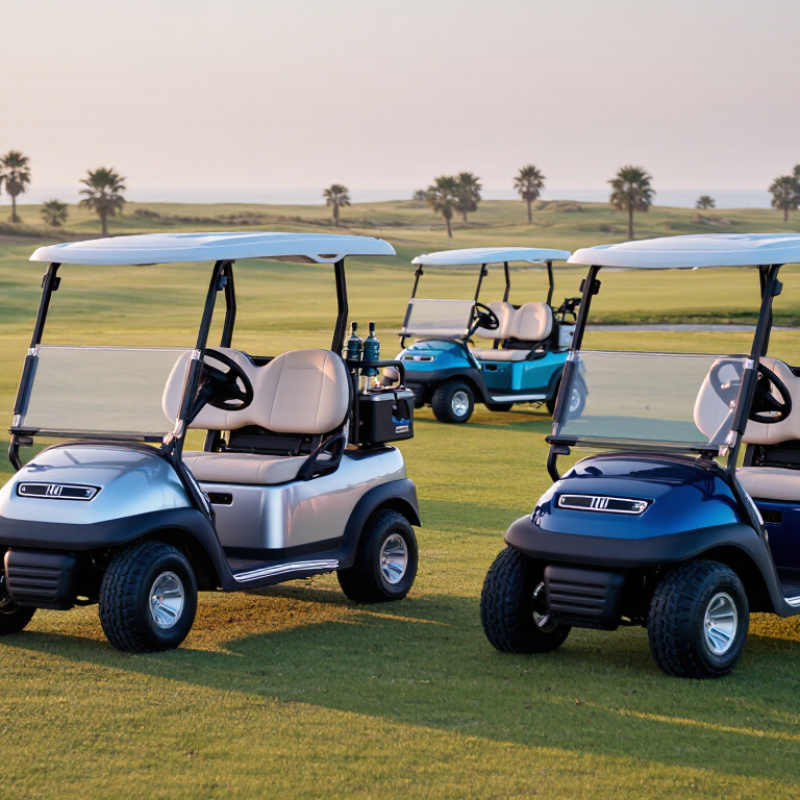
2026 Golf Cart Types: 2–6 Seats, Utility Models, and LSVs
Choosing among 2–6-seat golf carts starts with the route and passenger load. A two-seat model is easier to park beside a narrow shed or course path. Four seats suit families and small groups, while six seats add capacity but need more turning room. More seats also mean less space for bags, unless the layout includes a rear cargo platform. The National Golf Foundation’s 2024 participation report counted 26.6 million U.S. on-course golfers in 2023, a useful signal of the scale of golf use—not a direct measure of cart sales.
Utility carts prioritize work over passenger comfort. Look for a stated payload rating, bed dimensions, braking performance, and ground clearance. A damp lawn, tools, and a small trailer can quickly test an undersized setup. LSVs are another category: in the United States, NHTSA defines them as vehicles capable of 20–25 mph, with federal equipment requirements. Road access and local rules vary internationally, so confirm permitted routes before buying. The fastest option is not always the most practical.
Tips: Match seat count to typical trips, not occasional guests. Check loaded range on hills, and measure garage clearance. Ask for the payload figure in writing. Even careful comparisons can miss real-world wear; request a hands-on inspection.
2026 Best Golf Course Carts for Sale Worldwide
2026 Golf Cart Types: 2–6 Seats, Utility Models, and LSVs
Seating capacity varies by vehicle design and local regulations. Standard golf carts are commonly available in 2-, 4-, and 6-seat configurations. Utility carts generally prioritize cargo space and often provide two seats, while low-speed vehicles (LSVs) may be configured for two to six occupants depending on road-approval requirements.
Battery Technology: Comparing 48–72V Lead-Acid and Lithium-Ion Systems
2026 Best Golf Course Carts for Sale Worldwide
Battery technology shapes every 48–72V golf cart purchase. Lead-acid systems remain affordable and familiar. They also tolerate basic charging habits reasonably well. However, they are heavy, require ventilation, and lose performance as voltage falls. The U.S. Department of Energy’s 2023 Energy Storage Handbook reports typical lead-acid round-trip efficiency near 70–85%.
Lithium-ion systems usually deliver higher usable energy within the same voltage range. DOE data places lithium-ion efficiency around 90–95%. That difference can mean steadier hill climbing and fewer charging losses. In practical inspections, a 72V lithium pack often feels more consistent than a 48V lead-acid pack under heavy load. Weight matters too. A lighter cart leaves more capacity for passengers, tools, or course equipment.
Still, lithium is not automatically better. It needs a properly matched battery-management system, charger, and thermal protection. The Battery Council International reports that lead-acid batteries maintain a recycling rate above 95% in established collection systems. Lithium recycling infrastructure remains less uniform worldwide. That complicates end-of-life planning. My view is slightly cautious: lithium suits intensive fleets, while lead-acid can fit modest use and tighter budgets. Total cost calculations should include replacement labor, charging energy, downtime, and disposal procedures. The cheapest invoice may age badly.
Performance Data: 4–15 kW Motors, Speed Limits, and Driving Range
When comparing golf course carts for sale worldwide in 2026, motor power deserves careful attention. A 4–6 kW motor suits flat paths, light loads, and short resort routes. A 7–10 kW system offers stronger hill performance and quicker recovery after frequent stops. Motors rated from 11–15 kW are better for steep terrain, heavier utility work, or extended passenger use. More power is not automatically better. It can increase energy consumption, tire wear, and purchase cost.
Speed limits must match the cart’s intended environment. Many course vehicles operate near 20–25 km/h, while road-approved models may follow different local requirements. Always check the destination’s rules, braking equipment, lighting, and registration standards. A technical data sheet helps, but a real drive matters more. I watch acceleration on a slope, stopping distance, steering response, and motor heat after repeated runs.
Driving range figures need practical interpretation. A claimed 60–100 km may assume flat ground, moderate speed, light passengers, and ideal weather. My first range estimate was too optimistic. Cold temperatures, wet grass, hills, and an aging battery can reduce usable distance sharply. For daily operation, leave a 20% reserve instead of planning around the maximum figure. Battery capacity, charging time, payload, and replacement support should be recorded during inspection. Small details matter. A quiet motor is useful, but predictable performance matters more.
Safety Compliance: ANSI/ITSDF B56.8 Standards and 15-mph Golf-Cart Rules
When evaluating golf course carts for sale worldwide, safety begins with the speed label, not the paint finish. ANSI/ITSDF B56.8 provides a recognized framework for design, braking, steering, guards, controls, and operator protection. Its golf-car classification centers on a 15-mph maximum speed. That figure matters. A cart moving across a wet path needs more stopping distance than a showroom test suggests.
Buyers should separate engineering compliance from local road permission. A 15-mph rule may apply on a private course, resort, campus, or local road network. It is not a universal worldwide limit. In the United States, NHTSA defines a low-speed vehicle as operating between 20 and 25 mph, with requirements under FMVSS 500. That category is different from a conventional golf cart. The distinction is easy to miss.
Industry safety data supports caution. The U.S. Consumer Product Safety Commission’s NEISS surveillance continues to record golf-cart injuries involving falls, rollovers, collisions, and passenger ejection. Buyers should request test records, rated-load details, brake performance data, tire specifications, and service history. Inspect the emergency stop controls and seat-belt anchorage points in person. Small omissions can become expensive mistakes.
A useful checklist is simple. Confirm the cart’s certified speed. Verify lighting, mirrors, reflectors, and braking equipment. Then check the destination’s registration and operating rules. A compliant cart can still be unsuitable for public roads. That uncomfortable gap deserves careful review.
Worldwide Buying Guide: Pricing, Shipping, Charging, and Local Certification
In 2026, the best golf course carts for sale worldwide balance price, range, service access, and transport readiness. Price is only the starting point. A new electric cart may cost less overseas, yet freight, insurance, import duties, port handling, and inland delivery can change the final figure. Request a complete landed-cost quotation. Used carts need extra checks, including battery age, frame corrosion, brake response, tire wear, and charger condition. A photograph can hide serious damage.
Shipping method matters. RoRo transport may suit running vehicles, while container shipping offers stronger protection for disassembled units. Confirm crate dimensions, loading equipment, delivery terms, and who handles customs documents. Battery type affects transport planning. Some carriers request special declarations, packaging, or state-of-charge limits. Delays happen. Build time into the purchase plan.
Charging systems must match the destination. Check voltage, frequency, plug style, charger compatibility, and local electrical requirements before payment. Lead-acid batteries need ventilation, water checks, and regular charging. Lithium systems usually reduce maintenance, but replacement costs can be higher. I would also verify service support near the course, not only the seller’s warranty. Local certification is easy to overlook. Requirements may cover lighting, braking, speed limits, electromagnetic safety, battery disposal, or road registration. A cart approved for private course paths may not qualify for public streets. Confirm the rules with the local authority and keep invoices, serial records, manuals, and conformity documents. Mistakes here are expensive, and a rushed purchase rarely becomes cheaper later.
FAQS
Match the seat count to typical trips, not occasional guests. Two seats fit narrow paths and tight storage spaces. Four seats work for families or small groups. Six seats need more turning room and may leave less space for bags. Small details matter.
Check the payload rating, bed dimensions, braking, and ground clearance. A damp lawn, tools, and a small trailer can challenge an undersized cart. Get the payload figure in writing. I might still underestimate how rough the route feels.
In the United States, an LSV is generally capable of 20–25 mph and must meet applicable equipment requirements. Public-road access varies by location. Confirm permitted routes with the relevant local authority before buying.
Add freight, insurance, import duties, port handling, and inland delivery to the purchase price. Ask for a complete landed-cost quotation. Delays happen. Leave extra time for shipping and paperwork.
Check battery age, frame corrosion, brake response, tire wear, and charger condition. Request a hands-on inspection when possible. Photos can hide damage. A clean-looking cart may still need costly repairs.
Confirm voltage, frequency, plug style, and charger compatibility before payment. Also check local electrical requirements. A mismatched setup can delay use and add expense.
Lead-acid batteries need ventilation, water checks, and regular charging. Lithium systems usually need less maintenance, but replacement costs can be higher. Compare the full ownership cost, not just the purchase price.
Ask about nearby service support, local certification, and any route restrictions. Keep invoices, serial records, manuals, and conformity documents. I would not rely on a seller’s warranty alone; that may be too optimistic.
Conclusion
This guide to 2026 Golf Course Carts explains how buyers can compare models for recreational, commercial, and utility use worldwide. It covers seating options from compact two-seat carts to six-seat vehicles, as well as cargo-focused utility models and low-speed vehicles designed for approved public-road applications. Readers will also learn how 48–72V lead-acid and lithium-ion battery systems differ in cost, maintenance, charging time, lifespan, and practical range.
The article reviews key performance factors, including 4–15 kW motor ratings, speed limitations, terrain capability, and expected driving distance. It also highlights safety considerations based on ANSI/ITSDF B56.8 guidance and common 15-mph golf-cart rules, while emphasizing that local requirements may vary. Finally, the worldwide buying guide discusses estimated pricing, shipping arrangements, charging infrastructure, warranty questions, import considerations, and local certification procedures, helping buyers select a suitable cart responsibly and prepare for ownership in their region.

 Zhigao